Rochelle Sharpe’s article, Childhood Trauma Doesn’t Have to Be a Lifelong Curse, was a true eye-opener for me. I remember being flattened when I first read about the 1998 Adverse Childhood Experiences (ACE) study. When I learned that childhood trauma can increase risks of heart disease, cancer, addiction, and suicide, my heart sank. I winced, knowing that I had experienced ACEs as a child — and admittedly, so had my children.
In Sharpe’s article, I learned that research now points to ways of mitigating these long-term effects. A new framework, Healthy Outcomes from Positive Experiences (HOPE), is “shifting the paradigm from what is the problem to what can I do about it.”
The article goes on to say that “evidence has emerged showing the brain rewires itself after good as well as bad events.”
Yes, ACEs increase risk — but perhaps they do not always determine destiny.
That is my hope.
Let me share with you a moment I witnessed — healing in action.
A pile of flip-flops at the entrance to the rescue facility marks the beginning of another magical day. The sound of many tiny feet racing up the stairs signals the team: Go time.
A small boy recognizes me from our first day and runs toward me, hand raised for a high five. I’m guessing he’s about six or seven years old. It’s hard to tell. The children are small for their age, often due to poor nutrition.
He slaps my palm and looks into my eyes. The twinkle there tells me he’s curious about this white lady with blue eyes.
His eyes are big and brown. What have those beautiful eyes seen? They divulge nothing. I smile so wide my cheeks ache.
His mouth is slightly disfigured — perhaps a cleft palate and a rough repair. Tiny teeth appear in the most endearing smile I’ve ever seen, and my heart breaks.
His T-shirt and shorts are filthy and smell of sweat, dirt, and pee. I want to hug him. Instead, I offer another high five.
He doesn’t speak English, and I don’t speak his language, except for a few greetings. He seems perfectly content with this.
“My name is Susan,” I say slowly, patting my chest. “What is your name?” I extend my hand toward him.
He pokes my chin with a tiny finger and bursts into laughter.
Unsure what to do next, I crouch down and begin counting his fingers. “One, two, three…” touching each fingertip as I go. He watches intently. “Ten!” I throw my hands in the air and shout, “Yahoo!”
He jumps up and claps over his head.
On our very first day, we found a way to bond. No language barrier here.
Each day after that, I sought him out in the crowd. A dozen times or more, our eyes would meet across the room, and we would both smile and wave. When the older kids led songs and dances, he would watch me make a fool of myself and collapse into belly laughter.
On the third day, I searched the room but couldn’t find him.
My heart raced.
Oh, God, please…
Each afternoon, our team left the facility during our lunch time, climbed into a van, and drove into the surrounding area with staff members. We delivered 20-pound sacks of rice to impoverished families. One sack of rice might be enough to prevent a child from being sold into trafficking.
The families lived in patchwork huts made from scraps of cardboard and sheet metal. One room at best. No toilets.
And then I saw him.
He was sitting with his family on a plastic tarp beneath an awning, receiving our greeting, prayers, and the rice.
He smiled and waved. I waved back, hopping from one foot to the other to shake biting ants off my feet. It took everything in me not to scoop him up and run.
Afterward, I watched him disappear into a doorless opening of a crumbling lean-to. I climbed into the back of the van and let the tears fall.
On our last day, we stood in a single-file line, high-fiving each child as we said goodbye. The little ones ran. The older ones walked more slowly. We all had tears in our eyes.
They knew.
We knew.
We might never see each other again.
I felt as though a vice were tightening around my heart.
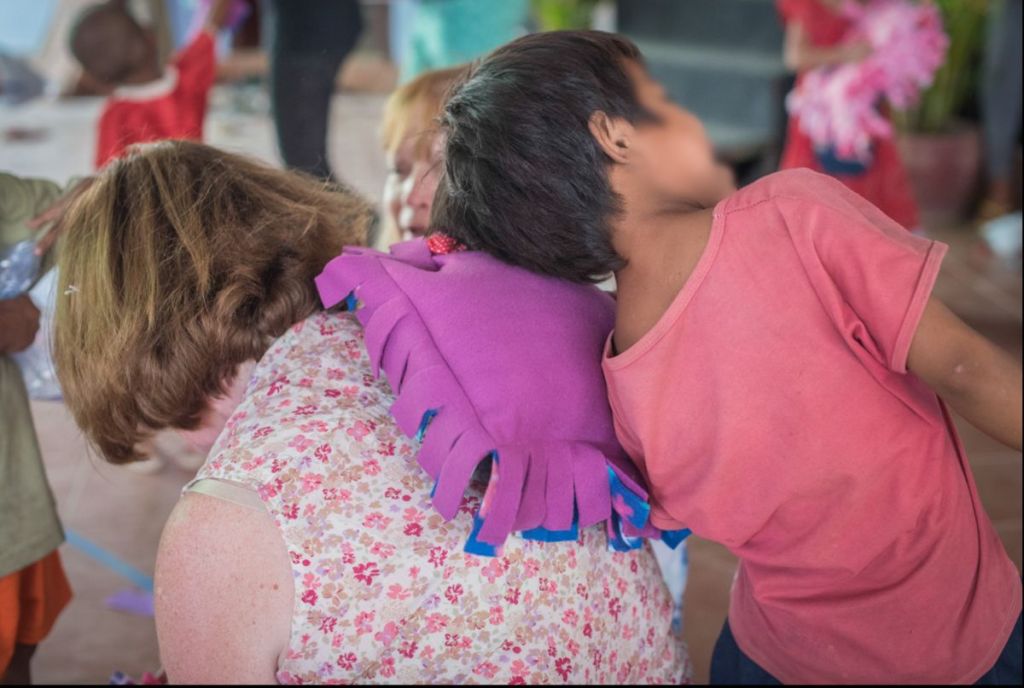
My little guy came up and wrapped his arms around my legs. I bent down and returned his hug.
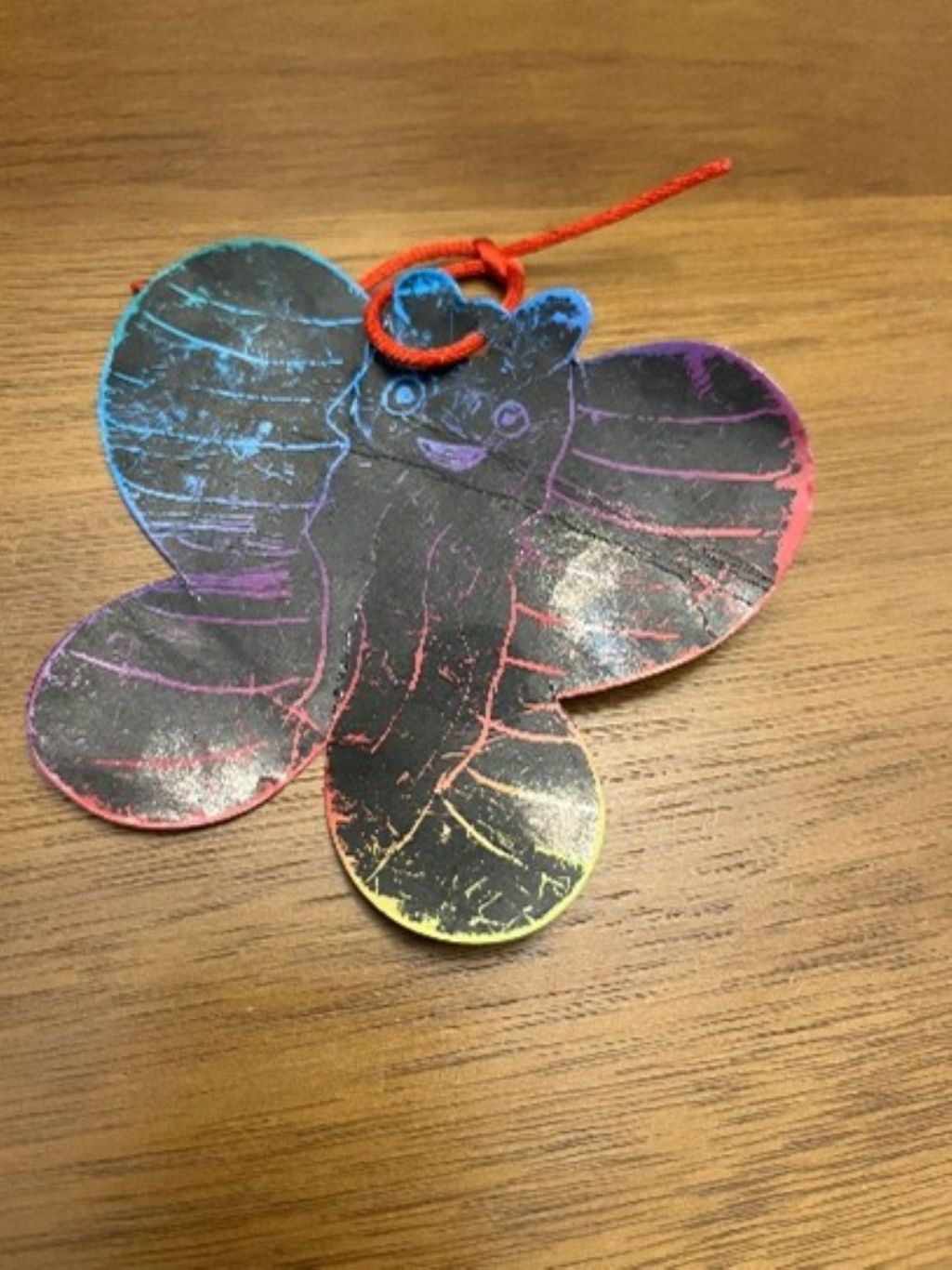
With sparkling eyes, he gestured that he had a surprise for me. We had made butterflies that day, and he proudly pressed his into my hands.
He had painted it completely black.
It looked more like a bat than a butterfly.
I will treasure it always.
I pressed it to my heart. “Thank you. God bless you,” I whispered, wiping sweat and tears from my face with my sleeve.
I don’t know what became of that little boy.
But I know this:
For ten days, he experienced consistency. Laughter. Safety. Touch that was not harmful. Adults who stayed.
That is HOPE.
I know he had known trauma. He had learned what harm in a relationship feels like.
But for ten days, relationship meant something different.
Steady adults matter. Safe love matters.
Positive experiences matter.
That is HOPE.
We cannot erase a child’s ACE score.
But we can add love.
We can add safety.
We can add a steady presence.
And then another question began to rise in me.
The HOPE framework speaks of positive experiences buffering toxic stress in children.
What if those experiences buffer in both directions?
What if healing in relationship is reciprocal?
For ten days, I was needed. I was present. I wasn’t trying to prove anything or accomplish anything beyond love. We had been told our only job was to give these children a reason to hope.
When that little boy pressed his black butterfly into my hands, something in me shifted.
He was not the only one being rewired.
Trauma occurs in relationship.
Healing also occurs in relationship.
And sometimes, the healing flows both ways.
I don’t know where that boy is today. I don’t know what trauma he still carries.
I only know that for ten days, we met each other in joy.
And when he placed that black butterfly in my hands, I understood something I had not understood before:
Love is never one-sided.
We were both being changed.
That is HOPE.
You do not need to travel across the world to offer HOPE to a child. HOPE is created in ordinary moments — when we listen, when we stay, when we offer kindness without expectation. A steady teacher. A caring neighbor. A patient grandparent. A volunteer. A safe adult who shows up again and again. These positive experiences matter more than we may ever know. They shape the architecture of the developing brain. They soften fear. They restore trust. And sometimes, they heal something within us, too. Each of us has the power to become part of a child’s story of healing. We do not need special training to begin. We only need to be present, gentle, and caring.
 For the Sake of Children