Tag: child advocacy

  • When Belonging Isn’t Guaranteed

    When Belonging Isn’t Guaranteed

    For many teens, belonging isn’t guaranteed.
    It’s something they stand at the edge of—watching, waiting, hoping to find their way in.

    For those growing up in foster care, that feeling doesn’t simply fade with time. In fact, as they approach adulthood, it can deepen. The system that once held them—however imperfectly—begins to loosen its grip.

    And then, almost quietly, they are expected to step forward on their own.

    Not long ago, I found myself thinking about a child I’ll call Maya.
    She’s not one specific child, and yet… she is.

    She is the child who moves from home to home, carrying her belongings in a bag that was never meant to hold a life. She is the child who learns, far too early, how to read a room—how to sense what is expected, what is safe, what might bring comfort, even if only for a moment.

    Children in foster care live with a range of experiences. Some are welcomed into homes that offer stability, care, and a true sense of belonging.

    But for others, uncertainty becomes a way of life. And in that uncertainty, something else quietly takes root:

    A deep longing to belong.

    When that longing goes unmet—when a child feels unseen, unheard, or unanchored—it can make them vulnerable in ways we don’t always talk about.

    Not because they are broken.
    But because they are human.

    And there are those in the world who know exactly how to recognize that longing—and exploit it.

    This is one of the quiet intersections between foster care and exploitation. It doesn’t begin with force. It often begins with attention. With someone noticing. With someone saying, “You matter.”

    And for a child who has felt invisible, that can be incredibly powerful.

    There is another moment we don’t talk about enough.

    It happens quietly, too.

    A child turns eighteen—or twenty-one, depending on the system—and suddenly, the structure that has held them, however imperfectly, is gone. They “age out” of foster care.

    No more placement. No home.
    No guaranteed adult to call.
    No steady hand to guide the next step.

    Some leave with support. Many do not.

    Imagine standing at the edge of adulthood with no safety net. No one to help you find housing, apply for a job, manage money, or simply sit beside you and say, “You’ve got this—I’m here.”

    For too many young people, this is where vulnerability deepens.

    Not because they lack strength.
    But because they have been asked to navigate a complex world without the relationships that make navigation possible.

    And yet—this is not a story without hope.

    Because the very thing that creates vulnerability—the longing to belong—is also the doorway to healing.

    I’ve seen this in the most unexpected places.

    During our talking circle in the yoga class my daughter leads at the Boys & Girls Club, there have been moments I will never forget.

    One day, the question was simple: What makes you sad?

    And one by one, the children began to share.

    Some spoke quietly. Some with hesitation. And some, to our surprise, through tears.

    One child shared that her grandmother was in the hospital, and she wasn’t allowed to visit. Everyone in that circle felt that child’s pain.

    What struck me most was not only what they shared, but that they could share.

    My daughter has created a space where these children feel safe. Where they are seen. Where they are not judged or hurried. And in that space, something begins to shift.

    We’ve watched children arrive, withdrawn and guarded, carrying more than any child should have to carry.

    And then, over time… something softens.

    A smile appears where there was none.
    A laugh breaks through.
    A child who once stayed silent begins to speak.

    A safe place can become a healing place.

    And that is what so many children—especially those who have experienced instability—are longing for.

    It doesn’t erase what they’ve been through.

    But it gives them something just as powerful:

    A sense that they matter.
    That they belong.
    That someone is there.

    So what can we do?

    We don’t have to fix the entire system to make a difference. But we can begin—right where we are.

    1. Be a consistent presence.
    Whether through mentoring, volunteering, or simply showing up regularly in a child’s life, consistency matters more than perfection. Trust is built in the returning.

    2. Support organizations that walk alongside youth aging out.
    There are programs that help with housing, job readiness, and life skills. These efforts often operate quietly—and they need both awareness and support.

    3. Help create safe spaces where children can be seen and heard.
    Whether in a classroom, a community program, or even within your own circle of influence, safety and trust are where healing begins.

    We may never fully know the impact of these small acts.

    But for a young person standing at the edge, unsure of where they belong…

    One steady connection can become a lifeline.

    And sometimes, that is where protection begins.

  • The Grief of the Witness

    The Grief of the Witness

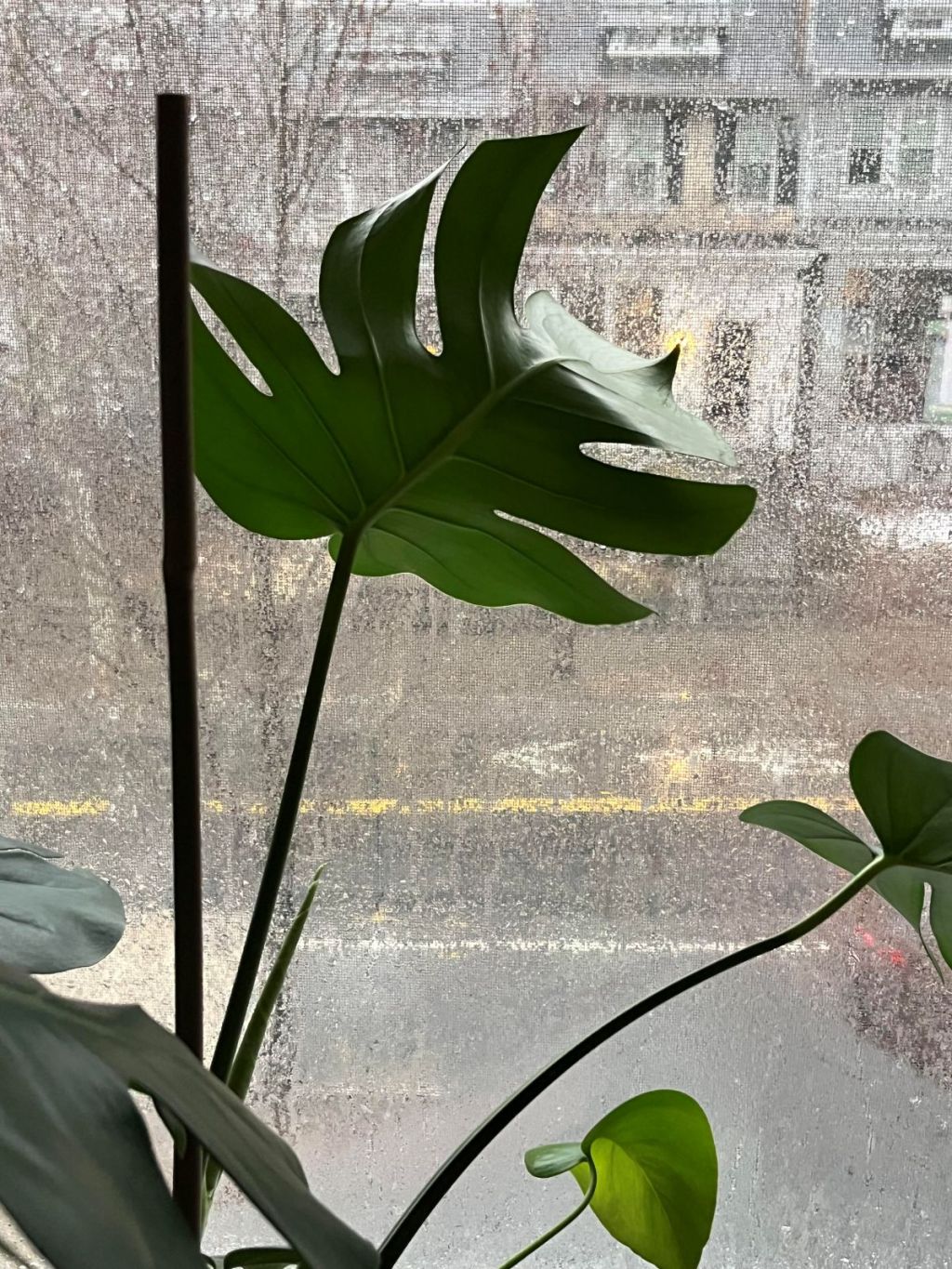
    I stood at the window this morning, wrapped in my bathrobe, a cup of steaming coffee in one hand. Heavy rain obscured the street below. Raindrops slid down the glass, one after another.

    God is crying for our crazy world,” I thought.

    “I wonder how they are doing now. Some of them have got to be in their twenties by now.”

    My eyes filled with tears of my own.

    The subject of trafficking and abuse is once again filling the headlines. People are debating. Arguing. Accusing.

    But this morning, I’m not thinking about the headlines.

    I’m grieving for the young survivors I met so long ago. I loved them then. I love them still. And I’m grieving for survivors everywhere who are quietly fighting to heal.


    What the Public Sees vs. What Survivors Live

    The public sees investigations, scandals, and courtroom scenes.

    Survivors live with memory, triggers, and nervous system responses.

    The news cycle will move on soon. Trauma does not.

    Grief often surfaces years after rescue. When survival mode finally quiets, grief rises.

    In survival mode, the body protects. Later, when safety comes, loss begins to be felt — lost childhood, lost trust, lost innocence, lost years.


    The Grief of the Witness

    My grief comes from knowing what should never have happened.

    It comes from understanding that healing can take a lifetime. From knowing that even when someone is safe, the story does not end there.

    There is a kind of grief that belongs to those who stand beside survivors. Not because they are broken — but because we know what was taken.

    And yet, I have witnessed healing.

    I have seen the power of love and play. I have stood in rooms alive with laughter — children reclaiming joy, even if only for an hour.

    That tells me healing is possible.

    And that strengthens my resolve.


    Why Language and Warnings Matter

    Part of that resolve is my writing.

    Stories of abuse can re-traumatize. Headlines alone can awaken buried pain. So I remind myself to speak carefully. Thoughtfully. With restraint.

    There are moments when outrage rises in me — when I want to shout what I know to be true.

    But love speaks differently than outrage.


    Grief and Hope Must Coexist

    Healing unfolds in its own time. There are breakthroughs and setbacks in no particular order. Healing often requires returning to what once overwhelmed us — this time with support.

    If you have ever loved someone who is healing — as a parent, therapist, teacher, advocate, volunteer, or friend — you may recognize this grief.

    It is the grief of the witness.

    Today’s headlines will fade.

    Healing will continue.

    And so will the love.

    And yes, the grief — not in despair, but in devotion.

    With love and hope,
    Susan

  • Resilience Rests in Relationships

    Resilience Rests in Relationships

    It was a particularly steamy day at the rescue center in Cambodia, and the team was tired. Serving more than one hundred children each day drained us in ways we hadn’t anticipated. Thankfully, our talented craft designer had come up with a winner.

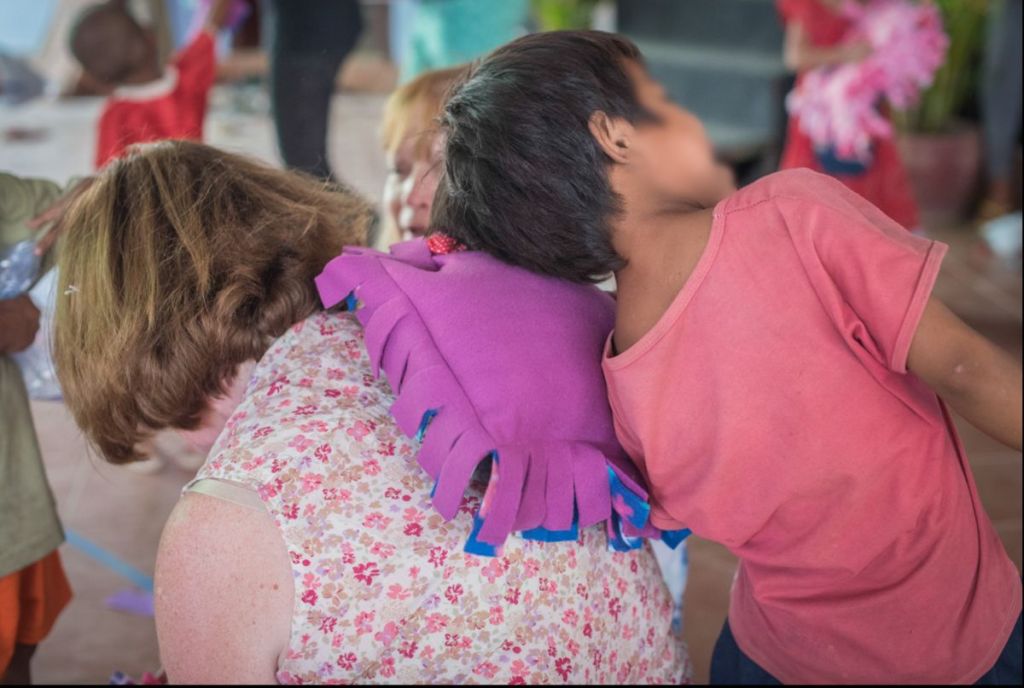
    The project was a pillow made from soft, colorful fleece. Simple enough: two squares placed together, thick fringes cut around the edges. The children’s job was to tie the matching fringes into knots and then stuff the pillow with polyester fiberfill.

    This was, by far, one of the most popular crafts we ever offered. Having seen where many of the children lived—and how they lived—it was easy to understand why. A pillow was not a given. It was a luxury. The older children quickly began teaching the younger ones, and for a moment, the room felt light.

    No, wait.

    The younger children couldn’t tie knots.

    We adjusted quickly. We formed circles—one team member, a couple of teenagers, and a handful of little ones in each group. The older kids helped the little ones tie the fringes and stuff the pillows. Laughter returned. Soon the pillows were finished, and that’s when the magic began.

    Some of the older children clutched their pillows to their chests and slipped away from the noise, stretching out quietly on the floor and resting their heads on their new cushions. Others began batting each other with their pillows, collapsing into giggles. As long as the laughter stayed joyful, we let it continue. And some of the youngest simply held their pillows close, pressing them against their hearts as if holding something fragile and sacred.

    Then came one of the most tender moments I witnessed in Cambodia.

    Our craft leader sat on the floor, knees drawn up, head resting on her folded arms. With a gentle pat on her own shoulder, she motioned to a little girl nearby, inviting her to rest. Smiling in quiet understanding, the child placed her pillow across my teammate’s back and lay her head down. She closed her eyes. For several long minutes, she remained there—safe, still, trusting.

    At the time, we called what we were seeing resilience—breathtaking resilience. These children seemed affectionate, adaptable, and open. They leaned into us easily. They trusted quickly.

    But many of these children had endured things no child should face—abuse, abandonment, hunger, fear. And yet here they were, resting their heads on the back of someone they had known for only a few days.

    Was this resilience?

    Or was it a nervous system exquisitely trained to detect safety—and move toward it immediately?

    When I later discussed this with a psychotherapist, I learned that such responses are often complex. Some of what we saw may indeed have been genuine relief—the natural playfulness and attachment capacity that children carry within them. But some behaviors may also reflect trauma adaptations, especially what is commonly called the “fawn response”—a survival strategy developed early to appease an abuser and stay safe.

    One of the realities of trauma is this: when a child transitions into safety, their survival responses do not simply switch off. The body remembers.

    That day, I realized that what I had called resilience might be something far more complex — and far more fragile.

    I keep returning to the image of that little girl resting across my teammate’s back. Her face had softened. Her breathing slowed. For a few minutes, she was simply a child at rest.

    Was that resilience?

    Or was it something even more remarkable — a body that had learned, through experience, how to detect safety quickly and lean into it while it lasted?

    In only a matter of days, she trusted enough to close her eyes. To release her weight. To be still.

    Children who grow up in chaos often become exquisitely attuned to shifts in tone, posture, and invitation. They read rooms faster than adults. They soften when it is wise to soften. They attach when attachment feels safe enough.

    That is not weakness. It is brilliance.

    But brilliance born of survival is not the same as resilience born of security.

    What I once called resilience may have been something even more extraordinary — a nervous system that had learned how to survive.

    And I am no longer so quick to label.

    I am not an expert in child development. I am learning. And the more I learn, the more careful I become with my words.

    Developmental psychologist Ann Masten, often called the “queen of resilience research,” describes resilience as “ordinary magic.” She explains that resilience grows not from heroic inner strength alone, but from ordinary, dependable systems — safe relationships, steady caregivers, predictable environments. In other words, resilience flourishes in the presence of safety.

    That day in Cambodia, I began to understand the difference. What I witnessed may not have been fully formed resilience. It may have been the beginning of it — a child responding to safety in the moment.

    Perhaps that is where resilience truly begins.

    Since those days spent at the rescue facility, I have tried to move more slowly when working with children who have survived trauma, and with survivors I have met more recently. I no longer assume I understand what I am seeing. What looks like resilience may be adaptation. What looks like trust may be vigilance softening for a moment.

    I gently encourage volunteers and caregivers to remember that we are often witnessing only a sliver of a child’s story. Our role is not to diagnose or label, but to provide consistent safety and steady presence. And when deeper wounds surface — as they sometimes do — that is the time to step aside and invite trained professionals to guide the healing.

    Children deserve more than our admiration for their “strength.” They deserve environments where resilience can grow slowly, securely, and without the need for survival brilliance.

    Perhaps the most responsible posture we can take is this: stay curious, stay humble, and when in doubt, call in the experts.

  • The Black Butterfly: How Healing in Relationship Flows Both Ways

    The Black Butterfly: How Healing in Relationship Flows Both Ways

    Rochelle Sharpe’s article, Childhood Trauma Doesn’t Have to Be a Lifelong Curse, was a true eye-opener for me. I remember being flattened when I first read about the 1998 Adverse Childhood Experiences (ACE) study. When I learned that childhood trauma can increase risks of heart disease, cancer, addiction, and suicide, my heart sank. I winced, knowing that I had experienced ACEs as a child — and admittedly, so had my children.

    In Sharpe’s article, I learned that research now points to ways of mitigating these long-term effects. A new framework, Healthy Outcomes from Positive Experiences (HOPE), is “shifting the paradigm from what is the problem to what can I do about it.”

    The article goes on to say that “evidence has emerged showing the brain rewires itself after good as well as bad events.”

    Yes, ACEs increase risk — but perhaps they do not always determine destiny.

    That is my hope.

    Let me share with you a moment I witnessed — healing in action.


    A pile of flip-flops at the entrance to the rescue facility marks the beginning of another magical day. The sound of many tiny feet racing up the stairs signals the team: Go time.

    A small boy recognizes me from our first day and runs toward me, hand raised for a high five. I’m guessing he’s about six or seven years old. It’s hard to tell. The children are small for their age, often due to poor nutrition.

    He slaps my palm and looks into my eyes. The twinkle there tells me he’s curious about this white lady with blue eyes.

    His eyes are big and brown. What have those beautiful eyes seen? They divulge nothing. I smile so wide my cheeks ache.

    His mouth is slightly disfigured — perhaps a cleft palate and a rough repair. Tiny teeth appear in the most endearing smile I’ve ever seen, and my heart breaks.

    His T-shirt and shorts are filthy and smell of sweat, dirt, and pee. I want to hug him. Instead, I offer another high five.

    He doesn’t speak English, and I don’t speak his language, except for a few greetings. He seems perfectly content with this.

    “My name is Susan,” I say slowly, patting my chest. “What is your name?” I extend my hand toward him.

    He pokes my chin with a tiny finger and bursts into laughter.

    Unsure what to do next, I crouch down and begin counting his fingers. “One, two, three…” touching each fingertip as I go. He watches intently. “Ten!” I throw my hands in the air and shout, “Yahoo!”

    He jumps up and claps over his head.

    On our very first day, we found a way to bond. No language barrier here.

    Each day after that, I sought him out in the crowd. A dozen times or more, our eyes would meet across the room, and we would both smile and wave. When the older kids led songs and dances, he would watch me make a fool of myself and collapse into belly laughter.

    On the third day, I searched the room but couldn’t find him.

    My heart raced.

    Oh, God, please…

    Each afternoon, our team left the facility during our lunch time, climbed into a van, and drove into the surrounding area with staff members. We delivered 20-pound sacks of rice to impoverished families. One sack of rice might be enough to prevent a child from being sold into trafficking.

    The families lived in patchwork huts made from scraps of cardboard and sheet metal. One room at best. No toilets.

    And then I saw him.

    He was sitting with his family on a plastic tarp beneath an awning, receiving our greeting, prayers, and the rice.

    He smiled and waved. I waved back, hopping from one foot to the other to shake biting ants off my feet. It took everything in me not to scoop him up and run.

    Afterward, I watched him disappear into a doorless opening of a crumbling lean-to. I climbed into the back of the van and let the tears fall.

    On our last day, we stood in a single-file line, high-fiving each child as we said goodbye. The little ones ran. The older ones walked more slowly. We all had tears in our eyes.

    They knew.

    We knew.

    We might never see each other again.

    I felt as though a vice were tightening around my heart.

    My little guy came up and wrapped his arms around my legs. I bent down and returned his hug.

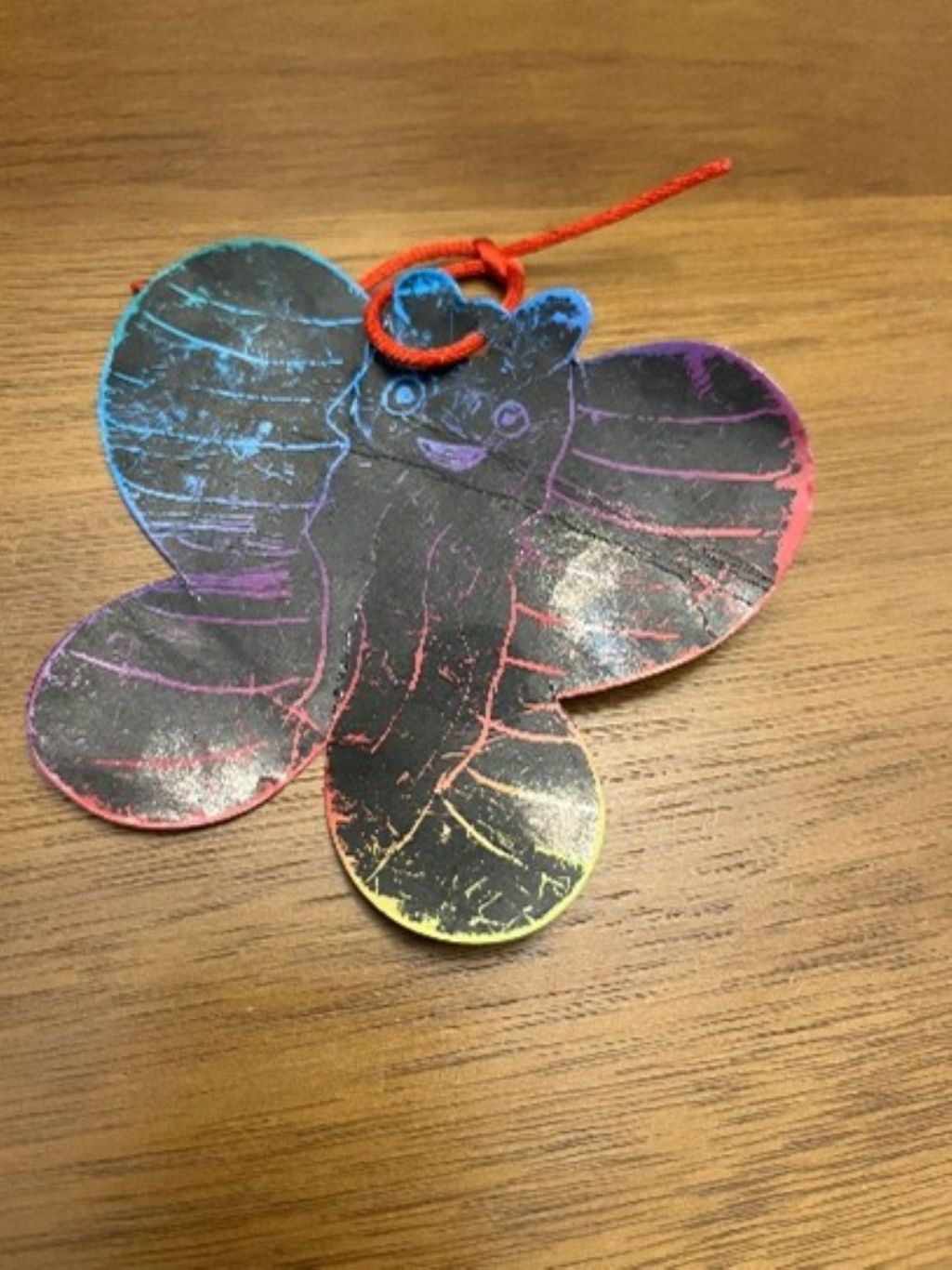
    With sparkling eyes, he gestured that he had a surprise for me. We had made butterflies that day, and he proudly pressed his into my hands.

    He had painted it completely black.

    It looked more like a bat than a butterfly.

    I will treasure it always.

    I pressed it to my heart. “Thank you. God bless you,” I whispered, wiping sweat and tears from my face with my sleeve.

    I don’t know what became of that little boy.

    But I know this:

    For ten days, he experienced consistency. Laughter. Safety. Touch that was not harmful. Adults who stayed.

    That is HOPE.

    I know he had known trauma. He had learned what harm in a relationship feels like.

    But for ten days, relationship meant something different.

    Steady adults matter. Safe love matters.

    Positive experiences matter.

    That is HOPE.

    We cannot erase a child’s ACE score.

    But we can add love.

    We can add safety.

    We can add a steady presence.

    And then another question began to rise in me.

    The HOPE framework speaks of positive experiences buffering toxic stress in children.

    What if those experiences buffer in both directions?

    What if healing in relationship is reciprocal?

    For ten days, I was needed. I was present. I wasn’t trying to prove anything or accomplish anything beyond love. We had been told our only job was to give these children a reason to hope.

    When that little boy pressed his black butterfly into my hands, something in me shifted.

    He was not the only one being rewired.

    Trauma occurs in relationship.

    Healing also occurs in relationship.

    And sometimes, the healing flows both ways.

    I don’t know where that boy is today. I don’t know what trauma he still carries.

    I only know that for ten days, we met each other in joy.

    And when he placed that black butterfly in my hands, I understood something I had not understood before:

    Love is never one-sided.

    We were both being changed.

    That is HOPE.

    You do not need to travel across the world to offer HOPE to a child. HOPE is created in ordinary moments — when we listen, when we stay, when we offer kindness without expectation. A steady teacher. A caring neighbor. A patient grandparent. A volunteer. A safe adult who shows up again and again. These positive experiences matter more than we may ever know. They shape the architecture of the developing brain. They soften fear. They restore trust. And sometimes, they heal something within us, too. Each of us has the power to become part of a child’s story of healing. We do not need special training to begin. We only need to be present, gentle, and caring.