Tag: child-protection

  • Children See Possibilities We Have Forgotten to See

    Children See Possibilities We Have Forgotten to See

    Another Saturday morning. Mom hangs laundry on the line by the big pine tree. Dad made a clothesline that stretches from the tree all the way down our backyard hill.

    I know! I’m going to bake a cake for Mom and Dad!

    I grab my bucket and shovel—the ones Dad gave me when we went to the beach—and run to the front yard, to my special spot under the bush with the white flowers. I fill the bucket about halfway with dirt, then run into the kitchen for a glass of water. Carefully, I carry it with two hands, back outside, pour it into the bucket, and stir.

    And stir some more. It needs something. This is too plain. I grab a handful of grass from the lawn, squish it up, and throw it into the mix. Finally. Just right.

    I pick up the blob of magical ingredients and pat it into a ball, just like Mom does when she makes meatloaf. Except this isn’t meatloaf. This is a cake.

    I place it carefully on a dish, pick a white blossom from the bush, and set it on top.

    There! A cake for Mom and Dad, I think, smiling proudly at my masterpiece.

    I don’t remember what Mom and Dad said when I presented them with my creation. But I remember making mud pies. Lots and lots of mud pies.

    All these years later, I find myself thinking about that happy little kid, hair up in two ponytails on the top of her head, sitting and “creating” in the dirt.

    No one had to teach her that dirt could become cake batter, grass could become some mysterious ingredient, or a flower could be the finishing touch. No one had to explain imagination to her.

    She simply saw possibilities. Children do that.

    Researchers have a name for one part of what is happening here: divergent thinking. Put simply, it means coming up with different ideas and possibilities rather than immediately searching for the one “right” answer. Researchers have studied it for decades, and studies show that even very young children can already do this kind of thinking.

    But I keep coming back to a different question.

    In teaching children how the world works, are we sometimes inadvertently teaching them to stop imagining how else it could work?

    Of course, children need us to teach them. There really are right answers sometimes. They need to learn rules and boundaries that keep them safe. They need knowledge and guidance as they make their way into the world.

    But sometimes we adults are a little too quick to provide the answer.

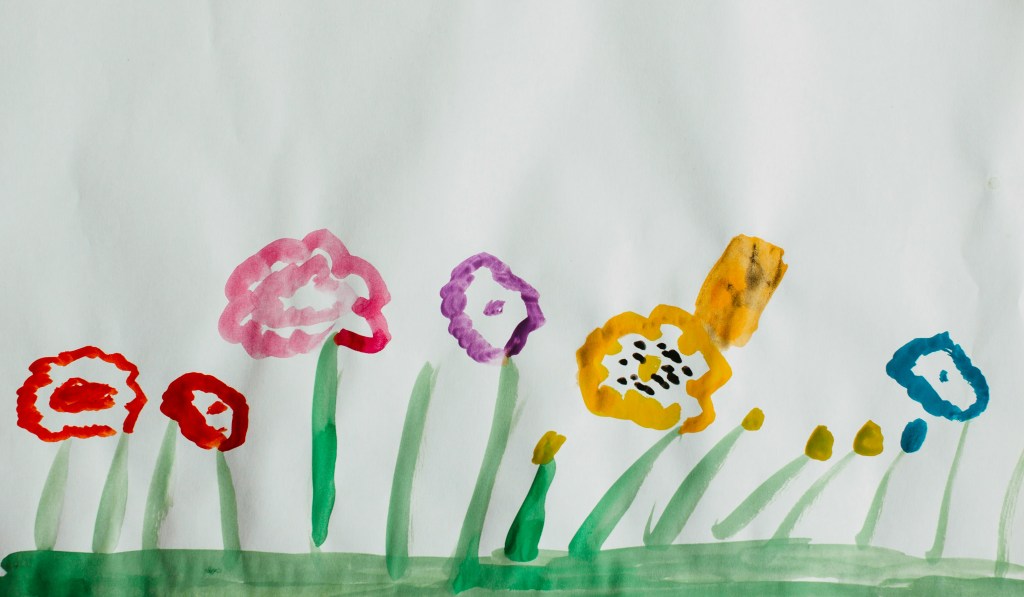
    Think about a child who draws a purple tree. Our adult instinct may be to say, “Trees aren’t purple.” We know what color trees are, and perhaps we think we’re helping the child get it right. But what if we resisted the urge to correct her and simply asked, “Tell me about your purple tree.” Maybe it’s purple because she loves purple. Maybe it’s a magical tree. Maybe she saw a tree at sunset that really did look purple. Or maybe there is no reason at all. Does it matter? The tree doesn’t need to be green. Not yet. For this moment, perhaps we can simply let the child show us what she sees.

    This is one reason I keep returning to the importance of open-ended play. When children play without an adult deciding what the finished product should look like, they get to experiment. They make things up. They try something, change their minds, tear it apart, and start again. A blanket becomes a fort. A stick becomes a magic wand. A cardboard box becomes a playhouse.

    And dirt and water become a cake for Mom and Dad.

    There is something else worth remembering. The children we are raising today will inherit problems we cannot solve for them. They will face questions for which no answer conveniently waits in the back of a book. They will need knowledge, certainly. But they will also need the ability to imagine something that doesn’t exist yet.

    Perhaps that is why we should be careful with this wonderful capacity children bring with them.

    Our job isn’t only to teach children what we know. Maybe part of our job is to protect their willingness to wonder about what we don’t know.

    The next time a child comes up with an answer that seems ridiculous, invents a new use for an old object, or creates something that makes absolutely no sense to us, perhaps we can wait a moment before correcting.

    We might simply ask, “Tell me more.”

    Because children see possibilities we have forgotten to see.

    And sometimes, if we’re willing to listen, they may help us see them again.

    For Those Who Want to Dig Deeper

    Bai, H., Mulder, H., Moerbeek, M., Kroesbergen, E., & Leseman, P. (2021). “Divergent thinking in four-year-old children: An analysis of thinking processes in performing the Alternative Uses Task.” Thinking Skills and Creativity, 40, 100814. This study examined how four-year-olds come up with unusual uses for familiar objects and found that young children already use different thinking processes to generate original ideas.

    Bai, H., Mulder, H., Moerbeek, M., Leseman, P. P. M., & Kroesbergen, E. H. (2023). “The development of divergent thinking in 4- to 6-year-old children.” Creativity Research Journal, 36(4), 656-674. Researchers followed 107 children beginning at age four for a year and a half, repeatedly asking them to think of unusual uses for ordinary objects. The study offers a fascinating look at how divergent thinking develops during early childhood.

    Vaisarova, J., & Carlson, S. M. (2021). “When a spoon is not a spoon: Examining the role of executive function in young children’s divergent thinking.” Trends in Neuroscience and Education, 25, 100161. In studies of children ages four to six, researchers found that younger children sometimes generated more or more original ideas when objects were unfamiliar to them—a particularly interesting finding when we consider how knowing what something is “supposed” to be may shape what else we imagine it could be.

    Kleibeuker, S. W., De Dreu, C. K. W., & Crone, E. A. (2013). “The development of creative cognition across adolescence: distinct trajectories for insight and divergent thinking.” Developmental Science, 16(1), 2–12. This study reminds us that creativity doesn’t simply disappear as children grow older. Different forms of creative thinking follow different developmental paths.

  • Play Is Not Equally Accessible to Every Child

    Play Is Not Equally Accessible to Every Child

    When I was growing up, it wasn’t unusual for my sister and me to grab breakfast and head out the door for our next adventure. “Be back before dinner!” Mom would wave us off with a smile. Our neighborhood was our playground.

    As I get ready to join my co-authors for the Brave Families Book Summit celebrating the launch of The Ultimate Guide to Long-Lasting, Loving Relationships, I’ve been thinking about my chapter in the book, The Gift of Play: Raising Healthy, Resilient Children.

    It has dawned on me that many parents in Washington, D.C., and in cities across the country don’t have that option.

    Some children can’t ride a bicycle around the block, wander in the woods searching for fairy caps, or play kickball in the street. Not because their parents don’t value play. Because their parents are protecting them.

    Some parents desperately want to give their children the gift of free play, but their circumstances make that incredibly difficult. How do we create safe places where all children can experience the developmental gifts of play? As we encourage families to embrace play, I don’t want to lose sight of that reality.

    This year, I’ve had the immense joy of volunteering at the Boys and Girls Club of America here in DC. The Club is more than an after-school program. It’s a place where children can play, belong, and feel safe. That’s why places like the Boys & Girls Club are so important—not because they occupy children after school, but because they provide something many neighborhoods no longer can: a safe place to play.

    I’ve been writing a lot about One Safe Adult. This year has reminded me that children also need One Safe Place. The two often go hand in hand. Perhaps one of the greatest gifts we can give children today isn’t simply encouraging more play. It’s creating places where they are safe enough to play.

    ***

    If this reflection resonates with you, I invite you to explore Brave Families: The Ultimate Guide to Long-Lasting, Loving Relationships, a collaborative book featuring practical tools and heartfelt stories from 25 authors dedicated to strengthening families and nurturing meaningful relationships.

    If you’d like to go a step further, I hope you’ll join us for the Brave Families Book Summit, August 5–6, 2026. This free online event features interviews and live panel discussions with many of the contributing authors. I’ll be participating in a live panel discussion on Wednesday, August 5, where we’ll explore Building Strong Family Foundations and share practical ways to help children grow into healthy, resilient adults.

    Whether you join us for the Summit, read the book, or simply continue the conversation, thank you for caring about the well-being of children and families. I hope to see you there.

  • Protect the Child’s Right to Play

    Protect the Child’s Right to Play

    As the world feels heavy this week, I’m holding children everywhere in my heart. Today’s reflection is offered in that spirit.

    Seems Like Yesterday

    “Hand me some more nails!” I called down to my sister from my perch high in our favorite pine tree.

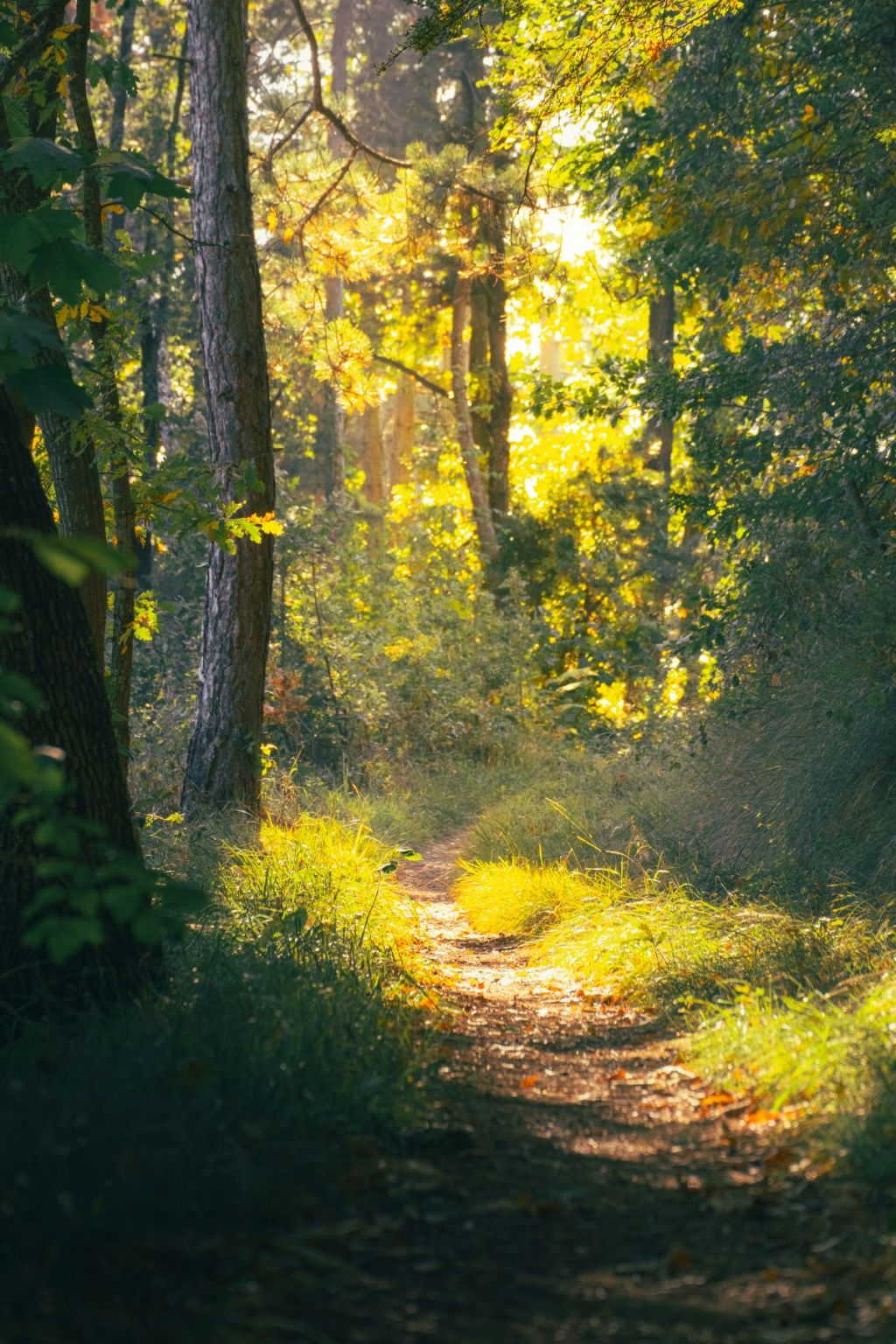
    Long ago, someone had planted about a dozen pines in a wide circle above our house. Inside that ring of trees lay what Peggy and I named the secret meadow. The air smelled like Christmas all year long — thick with sap and sun-warmed needles. Purple lupine and bright yellow buttercups pushed up through the grass. Low brush formed perfect hiding places for imaginary enemies and invisible kingdoms.

    This was where we ruled the world.

    Our tree had massive limbs and sticky green needles that clung to our jeans. Five pieces of scrap wood from Dad’s woodpile had been hammered into the trunk — our “magic ladder to the sky.” At the time, I was certain I was at least twenty feet in the air. Looking back, it was probably closer to five. But in childhood, five feet can feel like Everest.

    “I can’t reach!” Peggy yelled, one foot testing the first board, the other still firmly planted on the pine-needle floor below.

    I climbed down a rung, gripping the bark, sap sticking to my palms. She dug into the paper bag Dad had given us and pulled out a fistful of long, heavy nails.

    “What if the board breaks?” Her eyes were wide.

    We had used at least five nails per rung — mostly because hammering them in was the best part of the whole operation.

    “Your other foot’s still on the ground,” I said confidently. “You won’t fall far.”

    That was childhood logic.

    We planned to build a fort at the very top. We would bring our lunch up there and survey the kingdom below — our house, the driveway, the world.

    Five rungs later, sweaty and triumphant, the plan changed.

    “This branch is perfect,” I declared, straddling a thick limb like I was riding a horse. “Hand me the lunch bag first!”

    Mom had packed peanut butter and jelly sandwiches, fully aware she wouldn’t see us for hours.

    Peggy climbed carefully, testing each rung with a bounce before trusting it. Finally, we sat facing each other, legs wrapped around the branch, giggling at our own daring. A Blue Jay landed above us and called out, as if announcing our accomplishment to the forest.

    We were explorers. Builders. Brave.

    The sun lowered. A breeze moved through the pine needles.

    “Peggy! Susan!”

    Then the cowbell.

    Mom stood somewhere below, clanging it in wide circles to make sure we heard.

    “Race you!” I yelled, already halfway down.

    Peggy jumped from the final rung into the soft bed of pine needles. We tore across the meadow, victorious.

    Another great adventure under our belts.


    Times Have Changed

    Some children today cannot step outside to play.

    Some can’t because of violence in their neighborhoods.
    Some because every hour of their day is scheduled.
    Some because screens have quietly replaced dirt, trees, and sky.

    And some because safety itself is uncertain.

    The body needs movement — and safety — to metabolize stress.
    Many children today, across all socioeconomic levels, are not getting either.


    The ACE Study

    The original ACE Study (Adverse Childhood Experiences), conducted between 1995 and 1997, surveyed more than 17,000 adults about their childhoods and their current health.

    Researchers discovered something sobering: as the number of adverse childhood experiences increased, so did the risk for long-term physical and mental health problems.

    ACEs include emotional, physical, and sexual abuse; neglect; and household challenges such as substance abuse, mental illness, parental separation, or incarceration.

    The study revealed something profound:

    Early adversity does not just shape memory.
    It shapes biology.


    Toxic Stress

    Stress, in small doses, helps us grow.

    But when a child lives in ongoing fear or unpredictability — and no steady adult helps regulate that fear — the body never fully relaxes.

    The heart beats faster.
    Muscles stay tight.
    Stress hormones keep flowing.

    Day after day.

    That unrelieved activation is what researchers call toxic stress.
    And it leaves its imprint not just on the mind, but on the body itself.


    The Protective Power of Movement and Play

    In The Deepest Well, Dr. Nadine Burke Harris identifies key strategies for healing a dysregulated stress response: sleep, mental health support, healthy relationships, exercise, and nutrition.

    When I first began studying ACEs, I assumed children naturally get one of those protective factors — exercise. I assumed play was automatic.

    I was wrong.

    Safe play is not guaranteed.

    Children in homes of every color and income level deserve safe spaces to move, explore, and let their bodies discharge stress.

    When children can’t climb, run, swing, dig, or build imaginary kingdoms, their stress physiology has nowhere to go.


    The Power of Safe Movement

    I grew up in an era of open meadows and unlocked doors. My parents did not live with the same fear many parents carry today.

    Now, volunteering at the Boys & Girls Club of America in Washington, D.C., I serve children whose nervous systems carry far more than mine ever did.

    Movement is not a luxury for children.

    It is biology.

    Running.
    Climbing.
    Swinging.
    Digging in dirt.

    These are not trivial games.

    They are how the body releases stress.
    They are how resilience is built from the inside out.

    When children lose safe spaces to move, they lose one of the simplest and most powerful buffers against toxic stress.

    Protecting children includes protecting their right to play.

    And sometimes, when I hear a distant clang of metal, I remember that cowbell — a reminder that freedom and safety can exist together.

    Every child deserves both.

  • For the Sake of the Children

    For the Sake of the Children

    “Consistent, nonjudgmental love transcends cultures.
    And when it does,
    something extraordinary can happen.
    We begin to see the child
    not only as a survivor,
    but as someone rising,
    someone remembering who she is,
    not who she was told to be.”

    Susan Ernst — Called to Serve, Standing with Survivors and Protecting Children Still at Risk.

    What I Have Witnessed

    Working with the children, one of the most surprising—and beautiful—things I witnessed was the profound healing that emerged through pure, simple joy. It wasn’t formal therapy or anything official. It was children laughing, running, being silly, and making up games. It was the small, ordinary moments when play took over, and worry loosened its grip, even if only for a little while.

    When we played together, you could see the change happening in real time. Faces lit up. Bodies softened. The heaviness lifted. It was as if their hearts remembered something essential—that they were still children, capable of happiness, still whole within themselves.

    I came to understand that play wasn’t merely a distraction.
    It was a form of medicine.
    Real medicine.

    When the children drew goofy pictures, raced one another, wrestled with adult volunteers, or sang at the top of their lungs, something deeper was happening beneath the laughter. They were letting go—bit by bit—of fear and tension they carried in their bodies. They were remembering what it felt like to trust, even tentatively. They were reconnecting with their natural creativity and silliness—the parts of themselves untouched by trauma.

    In those moments, they were also building new memories: memories of being safe, free, and loved.

    Often, the most healing moments were the messiest, noisiest, most ridiculous ones. Joy created space—wide, breathing space—for healing to take root in ways I never could have planned or predicted.

    I honestly believe that play is one of the purest forms of hope we have.

    And more recently, as I’ve had the privilege of getting to know and serve alongside survivors who have dedicated their lives to the fight against child abuse and trafficking, I’ve witnessed another kind of healing strength. A depth of resilience and grit that is hard to fathom, given what they have endured. These are not stories defined solely by harm, but by courage, resolve, and the fierce decision to protect others.

    These are the stories I want to share with you.

    What You’ll Find Here

    I’ll share personal stories and reflections drawn from my experiences working with children, survivors, and advocates committed to protection, healing, and hope. Some stories may be tender. Others may be difficult. When needed, I will include a disclaimer to let readers know that what follows may be uncomfortable to read. All stories are shared with the intention of fostering awareness rather than fear.

    You’ll also find reflections meant for parents, grandparents, educators, counselors, and anyone who cares about the well-being of children. I intend to offer perspective, insight, and encouragement—an invitation to notice, to listen, and to stay present to what children may be telling us, often without words.

    This space is grounded in truth-telling, compassion, and thoughtful dialogue. I believe that when we are willing to see clearly and respond with love, meaningful change becomes possible.

    Above all, this blog is an invitation to learn, to reflect, and to stand with children and survivors in ways that feel honest, human, and doable.

    An Invitation

    Perhaps something in these words stirred recognition, concern, or quiet resolve. Maybe you are carrying questions of your own—about children you love, stories you’ve heard, or moments you couldn’t quite make sense of at the time. You are welcome here.

    I offer reflection, witness, and a willingness to stay with what matters. This space is meant to be one you can return to—whenever you feel called.

    If you’d like to continue the conversation, you’re invited to subscribe and receive future reflections as they’re shared. There is no expectation and no obligation—only an open door.

    Thank you for being here. For caring. For choosing not to look away.

    For the sake of the children.