As the world feels heavy this week, I’m holding children everywhere in my heart. Today’s reflection is offered in that spirit.
Seems Like Yesterday
“Hand me some more nails!” I called down to my sister from my perch high in our favorite pine tree.
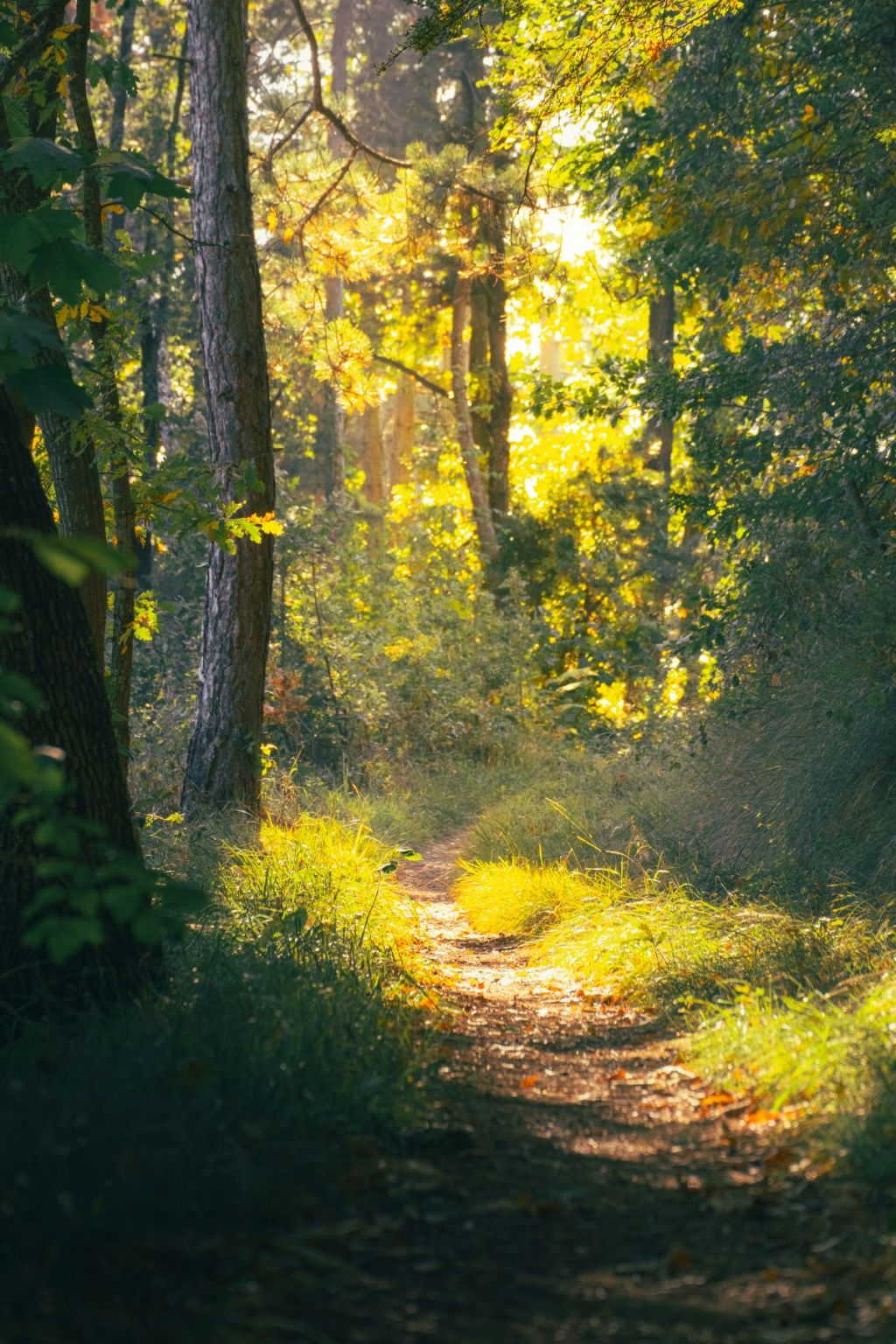
Long ago, someone had planted about a dozen pines in a wide circle above our house. Inside that ring of trees lay what Peggy and I named the secret meadow. The air smelled like Christmas all year long — thick with sap and sun-warmed needles. Purple lupine and bright yellow buttercups pushed up through the grass. Low brush formed perfect hiding places for imaginary enemies and invisible kingdoms.
This was where we ruled the world.
Our tree had massive limbs and sticky green needles that clung to our jeans. Five pieces of scrap wood from Dad’s woodpile had been hammered into the trunk — our “magic ladder to the sky.” At the time, I was certain I was at least twenty feet in the air. Looking back, it was probably closer to five. But in childhood, five feet can feel like Everest.
“I can’t reach!” Peggy yelled, one foot testing the first board, the other still firmly planted on the pine-needle floor below.
I climbed down a rung, gripping the bark, sap sticking to my palms. She dug into the paper bag Dad had given us and pulled out a fistful of long, heavy nails.
“What if the board breaks?” Her eyes were wide.
We had used at least five nails per rung — mostly because hammering them in was the best part of the whole operation.
“Your other foot’s still on the ground,” I said confidently. “You won’t fall far.”
That was childhood logic.
We planned to build a fort at the very top. We would bring our lunch up there and survey the kingdom below — our house, the driveway, the world.
Five rungs later, sweaty and triumphant, the plan changed.
“This branch is perfect,” I declared, straddling a thick limb like I was riding a horse. “Hand me the lunch bag first!”
Mom had packed peanut butter and jelly sandwiches, fully aware she wouldn’t see us for hours.
Peggy climbed carefully, testing each rung with a bounce before trusting it. Finally, we sat facing each other, legs wrapped around the branch, giggling at our own daring. A Blue Jay landed above us and called out, as if announcing our accomplishment to the forest.
We were explorers. Builders. Brave.
The sun lowered. A breeze moved through the pine needles.
“Peggy! Susan!”
Then the cowbell.
Mom stood somewhere below, clanging it in wide circles to make sure we heard.
“Race you!” I yelled, already halfway down.
Peggy jumped from the final rung into the soft bed of pine needles. We tore across the meadow, victorious.
Another great adventure under our belts.
Times Have Changed
Some children today cannot step outside to play.
Some can’t because of violence in their neighborhoods.
Some because every hour of their day is scheduled.
Some because screens have quietly replaced dirt, trees, and sky.
And some because safety itself is uncertain.
The body needs movement — and safety — to metabolize stress.
Many children today, across all socioeconomic levels, are not getting either.
The ACE Study
The original ACE Study (Adverse Childhood Experiences), conducted between 1995 and 1997, surveyed more than 17,000 adults about their childhoods and their current health.
Researchers discovered something sobering: as the number of adverse childhood experiences increased, so did the risk for long-term physical and mental health problems.
ACEs include emotional, physical, and sexual abuse; neglect; and household challenges such as substance abuse, mental illness, parental separation, or incarceration.
The study revealed something profound:
Early adversity does not just shape memory.
It shapes biology.
Toxic Stress
Stress, in small doses, helps us grow.
But when a child lives in ongoing fear or unpredictability — and no steady adult helps regulate that fear — the body never fully relaxes.
The heart beats faster.
Muscles stay tight.
Stress hormones keep flowing.
Day after day.
That unrelieved activation is what researchers call toxic stress.
And it leaves its imprint not just on the mind, but on the body itself.
The Protective Power of Movement and Play
In The Deepest Well, Dr. Nadine Burke Harris identifies key strategies for healing a dysregulated stress response: sleep, mental health support, healthy relationships, exercise, and nutrition.
When I first began studying ACEs, I assumed children naturally get one of those protective factors — exercise. I assumed play was automatic.
I was wrong.
Safe play is not guaranteed.
Children in homes of every color and income level deserve safe spaces to move, explore, and let their bodies discharge stress.
When children can’t climb, run, swing, dig, or build imaginary kingdoms, their stress physiology has nowhere to go.
The Power of Safe Movement
I grew up in an era of open meadows and unlocked doors. My parents did not live with the same fear many parents carry today.
Now, volunteering at the Boys & Girls Club of America in Washington, D.C., I serve children whose nervous systems carry far more than mine ever did.
Movement is not a luxury for children.
It is biology.
Running.
Climbing.
Swinging.
Digging in dirt.
These are not trivial games.
They are how the body releases stress.
They are how resilience is built from the inside out.
When children lose safe spaces to move, they lose one of the simplest and most powerful buffers against toxic stress.
Protecting children includes protecting their right to play.
And sometimes, when I hear a distant clang of metal, I remember that cowbell — a reminder that freedom and safety can exist together.
Every child deserves both.
 For the Sake of Children