Author: sernst992

  • Children See Possibilities We Have Forgotten to See

    Children See Possibilities We Have Forgotten to See

    Another Saturday morning. Mom hangs laundry on the line by the big pine tree. Dad made a clothesline that stretches from the tree all the way down our backyard hill.

    I know! I’m going to bake a cake for Mom and Dad!

    I grab my bucket and shovel—the ones Dad gave me when we went to the beach—and run to the front yard, to my special spot under the bush with the white flowers. I fill the bucket about halfway with dirt, then run into the kitchen for a glass of water. Carefully, I carry it with two hands, back outside, pour it into the bucket, and stir.

    And stir some more. It needs something. This is too plain. I grab a handful of grass from the lawn, squish it up, and throw it into the mix. Finally. Just right.

    I pick up the blob of magical ingredients and pat it into a ball, just like Mom does when she makes meatloaf. Except this isn’t meatloaf. This is a cake.

    I place it carefully on a dish, pick a white blossom from the bush, and set it on top.

    There! A cake for Mom and Dad, I think, smiling proudly at my masterpiece.

    I don’t remember what Mom and Dad said when I presented them with my creation. But I remember making mud pies. Lots and lots of mud pies.

    All these years later, I find myself thinking about that happy little kid, hair up in two ponytails on the top of her head, sitting and “creating” in the dirt.

    No one had to teach her that dirt could become cake batter, grass could become some mysterious ingredient, or a flower could be the finishing touch. No one had to explain imagination to her.

    She simply saw possibilities. Children do that.

    Researchers have a name for one part of what is happening here: divergent thinking. Put simply, it means coming up with different ideas and possibilities rather than immediately searching for the one “right” answer. Researchers have studied it for decades, and studies show that even very young children can already do this kind of thinking.

    But I keep coming back to a different question.

    In teaching children how the world works, are we sometimes inadvertently teaching them to stop imagining how else it could work?

    Of course, children need us to teach them. There really are right answers sometimes. They need to learn rules and boundaries that keep them safe. They need knowledge and guidance as they make their way into the world.

    But sometimes we adults are a little too quick to provide the answer.

    Think about a child who draws a purple tree. Our adult instinct may be to say, “Trees aren’t purple.” We know what color trees are, and perhaps we think we’re helping the child get it right. But what if we resisted the urge to correct her and simply asked, “Tell me about your purple tree.” Maybe it’s purple because she loves purple. Maybe it’s a magical tree. Maybe she saw a tree at sunset that really did look purple. Or maybe there is no reason at all. Does it matter? The tree doesn’t need to be green. Not yet. For this moment, perhaps we can simply let the child show us what she sees.

    This is one reason I keep returning to the importance of open-ended play. When children play without an adult deciding what the finished product should look like, they get to experiment. They make things up. They try something, change their minds, tear it apart, and start again. A blanket becomes a fort. A stick becomes a magic wand. A cardboard box becomes a playhouse.

    And dirt and water become a cake for Mom and Dad.

    There is something else worth remembering. The children we are raising today will inherit problems we cannot solve for them. They will face questions for which no answer conveniently waits in the back of a book. They will need knowledge, certainly. But they will also need the ability to imagine something that doesn’t exist yet.

    Perhaps that is why we should be careful with this wonderful capacity children bring with them.

    Our job isn’t only to teach children what we know. Maybe part of our job is to protect their willingness to wonder about what we don’t know.

    The next time a child comes up with an answer that seems ridiculous, invents a new use for an old object, or creates something that makes absolutely no sense to us, perhaps we can wait a moment before correcting.

    We might simply ask, “Tell me more.”

    Because children see possibilities we have forgotten to see.

    And sometimes, if we’re willing to listen, they may help us see them again.

    For Those Who Want to Dig Deeper

    Bai, H., Mulder, H., Moerbeek, M., Kroesbergen, E., & Leseman, P. (2021). “Divergent thinking in four-year-old children: An analysis of thinking processes in performing the Alternative Uses Task.” Thinking Skills and Creativity, 40, 100814. This study examined how four-year-olds come up with unusual uses for familiar objects and found that young children already use different thinking processes to generate original ideas.

    Bai, H., Mulder, H., Moerbeek, M., Leseman, P. P. M., & Kroesbergen, E. H. (2023). “The development of divergent thinking in 4- to 6-year-old children.” Creativity Research Journal, 36(4), 656-674. Researchers followed 107 children beginning at age four for a year and a half, repeatedly asking them to think of unusual uses for ordinary objects. The study offers a fascinating look at how divergent thinking develops during early childhood.

    Vaisarova, J., & Carlson, S. M. (2021). “When a spoon is not a spoon: Examining the role of executive function in young children’s divergent thinking.” Trends in Neuroscience and Education, 25, 100161. In studies of children ages four to six, researchers found that younger children sometimes generated more or more original ideas when objects were unfamiliar to them—a particularly interesting finding when we consider how knowing what something is “supposed” to be may shape what else we imagine it could be.

    Kleibeuker, S. W., De Dreu, C. K. W., & Crone, E. A. (2013). “The development of creative cognition across adolescence: distinct trajectories for insight and divergent thinking.” Developmental Science, 16(1), 2–12. This study reminds us that creativity doesn’t simply disappear as children grow older. Different forms of creative thinking follow different developmental paths.

  • Play Is Not Equally Accessible to Every Child

    Play Is Not Equally Accessible to Every Child

    When I was growing up, it wasn’t unusual for my sister and me to grab breakfast and head out the door for our next adventure. “Be back before dinner!” Mom would wave us off with a smile. Our neighborhood was our playground.

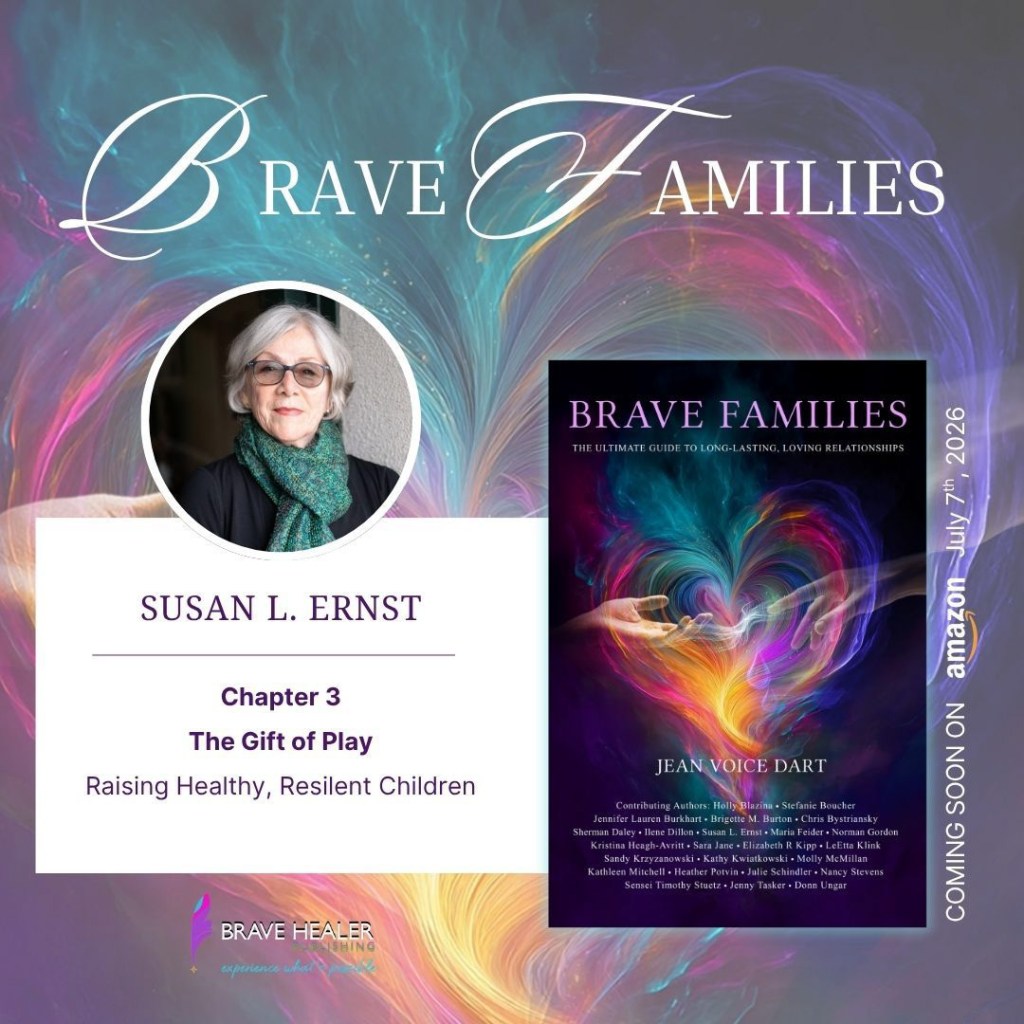
    As I get ready to join my co-authors for the Brave Families Book Summit celebrating the launch of The Ultimate Guide to Long-Lasting, Loving Relationships, I’ve been thinking about my chapter in the book, The Gift of Play: Raising Healthy, Resilient Children.

    It has dawned on me that many parents in Washington, D.C., and in cities across the country don’t have that option.

    Some children can’t ride a bicycle around the block, wander in the woods searching for fairy caps, or play kickball in the street. Not because their parents don’t value play. Because their parents are protecting them.

    Some parents desperately want to give their children the gift of free play, but their circumstances make that incredibly difficult. How do we create safe places where all children can experience the developmental gifts of play? As we encourage families to embrace play, I don’t want to lose sight of that reality.

    This year, I’ve had the immense joy of volunteering at the Boys and Girls Club of America here in DC. The Club is more than an after-school program. It’s a place where children can play, belong, and feel safe. That’s why places like the Boys & Girls Club are so important—not because they occupy children after school, but because they provide something many neighborhoods no longer can: a safe place to play.

    I’ve been writing a lot about One Safe Adult. This year has reminded me that children also need One Safe Place. The two often go hand in hand. Perhaps one of the greatest gifts we can give children today isn’t simply encouraging more play. It’s creating places where they are safe enough to play.

    ***

    If this reflection resonates with you, I invite you to explore Brave Families: The Ultimate Guide to Long-Lasting, Loving Relationships, a collaborative book featuring practical tools and heartfelt stories from 25 authors dedicated to strengthening families and nurturing meaningful relationships.

    If you’d like to go a step further, I hope you’ll join us for the Brave Families Book Summit, August 5–6, 2026. This free online event features interviews and live panel discussions with many of the contributing authors. I’ll be participating in a live panel discussion on Wednesday, August 5, where we’ll explore Building Strong Family Foundations and share practical ways to help children grow into healthy, resilient adults.

    Whether you join us for the Summit, read the book, or simply continue the conversation, thank you for caring about the well-being of children and families. I hope to see you there.

  • Brave Families Has Arrived!

    Brave Families Has Arrived!

    There are moments in life when you quietly close one chapter and step into another. This week was one of those moments for me.

    I’m delighted to share that Brave Families: The Ultimate Guide to Long-Lasting, Loving Relationships has officially launched—and it has already achieved Amazon Best Seller status in multiple categories. Cudos to our lead author: Jean Voice Dart!

    Being invited to join twenty-four remarkable authors in this project has been both an honor and a joy.

    As many of you know, my life’s work has centered on children—their safety, their resilience, and the relationships that help them heal and thrive. My chapter, “The Gift of Play: Raising Healthy, Resilient Children,” explores something wonderfully simple, yet profoundly important: the power of play.

    Play is so much more than entertainment. It is how children process emotions, build confidence, develop trust, solve problems, and experience the security of being fully seen by a caring adult. Long before children have the words to explain what they’re feeling, they communicate through play.

    One safe adult.
    One moment of genuine connection.
    One invitation to play.

    Sometimes that’s where healing begins.

    What has touched me most about Brave Families is that my chapter is only one small piece of a much larger conversation. Within these pages you’ll find stories about communication, healing relationships, financial wisdom, courageous conversations, trauma recovery, parenting, marriage, resilience, forgiveness, and so much more.

    Each author brings a unique life experience and practical tools that readers can immediately apply within their own families. The diversity of perspectives is what makes this book so special.

    To everyone who has supported my writing journey—from Called to Serve to this newest collaboration—thank you. Your encouragement has meant more than you know.

    My hope has always been the same: that every child experiences the safety of being loved, heard, protected, and encouraged to become exactly who they were created to be.

    Families aren’t perfect.

    But they can be brave.

    And sometimes, bravery begins with one small step toward one another.

    With gratitude,

    Susan L. Ernst

    Brave Families: The Ultimate Guide to Long-Lasting, Loving Relationships is available now on Amazon.


  • The Importance of Never Outgrowing Wonder

    The Importance of Never Outgrowing Wonder

    When I was a kid, I walked a dirt road to the school bus stop each morning with my mom and my sister.

    One morning, I kicked a rusty can along the roadside while my mom and sister walked hand-in-hand behind me. Suddenly, Mom called out, “Susan, watch out!”

    I jumped back.

    She pointed to the ground.

    “Don’t step on those, honey! Those are fairy caps.”

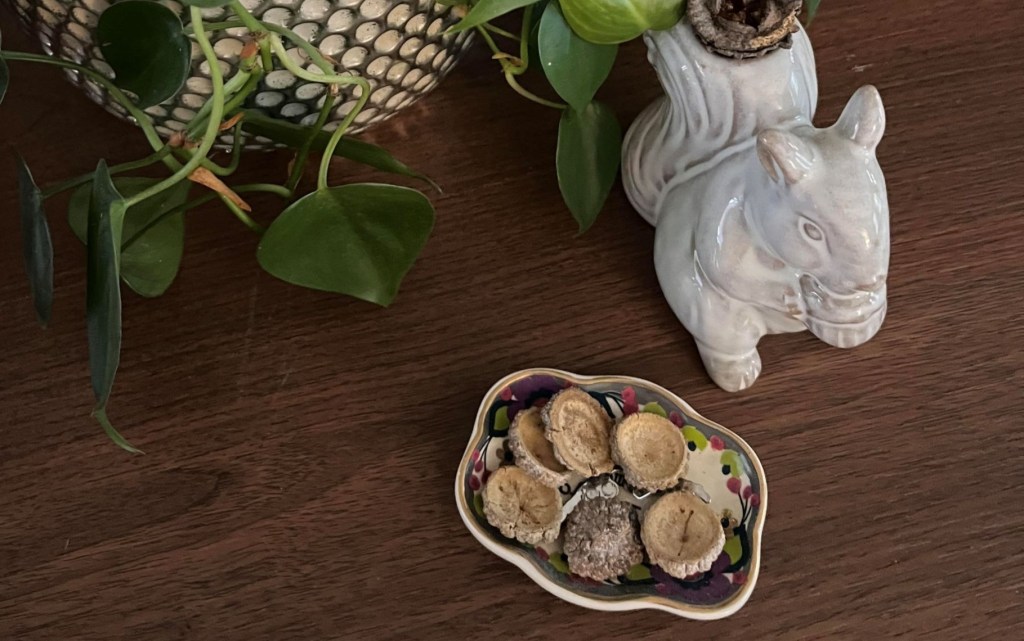
    I looked down. Acorns covered the roadside. Some still wore their little caps. Others had lost them.

    Mom was right. They were exactly the right size for fairies.

    “Where are the fairies?” I asked.

    “They live over there, and sometimes they fly so fast that their hats fall off,” she said, pointing at the woods that fringed this dusty road, and continued walking.

    I slipped a fairy cap into my pocket and hurried to catch up.

    For years afterward, those tiny acorn caps became treasures. They inspired adventures in the woods, stories, and hours of imaginative play.

    Looking back, I realize my mom was giving me a gift that had very little to do with fairies. She was teaching me to see the world with wonder, perhaps without even knowing it.

    As my daughters were growing up, I shared the story of the fairy caps with them. Happily, they seemed to embrace the magic with me! We collected them on walks and tucked them into our pockets.

    Today, my girls are grown women. But every now and then, one of them will hand me a tiny acorn cap she found along a trail, a smile and sparkle in her eyes.

    No explanation needed. We both know exactly what it means.

    A small piece of childhood wonder has survived another generation.

    Recently, I ordered two books I have wanted to read. One is by Donald Winnicott, who wrote extensively about children, play, and emotional development. The other is Walden by Henry David Thoreau, a classic I somehow never got around to reading.

    When I clicked “Place Order,” I felt excited.

    The same thing happens when I wander through the library in Georgetown, DC, a favorite pastime. I never know what treasure might be waiting on a shelf. I love history, and this library is filled to the brim with it. 

    I felt it when I began writing my own stories and certainly when I published my first solo book.

    I feel it each time a new book launches into the world.

    There is something hopeful about opening a book for the first time. A sense that somewhere inside those pages may be a new idea, a new understanding, or a new hero.

    At nearly eighty years old, I still feel that excitement. And I’ve decided that’s a very good thing.

    As we grow older, it’s easy to believe that wonder belongs to children. We become busy. Practical. Responsible. We focus on obligations, schedules, and the endless stream of troubling news from the world around us.

    Yet I wonder if curiosity and imagination remain just as important in later life as they were in childhood. They sure are for me.

    Wonder invites us to keep learning. Curiosity encourages us to ask questions. Imagination helps us see possibilities where others see only limitations.

    Wonder reminds us that there is always more to discover.

    I think that’s one reason I enjoy spending time with children. They haven’t forgotten how to be amazed. A cardboard box becomes a playhouse. A pine tree becomes a secret fort. An acorn cap becomes evidence that fairies have passed by.

    The beautiful thing is that we don’t have to leave that way of seeing things entirely behind.

    We can still pause to notice a bird at the feeder or a squirrel up to mischief.

    We can still delight in learning something new.

    We can still carry a few fairy caps home in our pockets.

    The world can be hard at times. We all know that.

    But wonder keeps a small window open to beauty, possibility, and joy.

    I believe growing older does not require us to outgrow wonder. Maybe it’s asking us to protect it.

    And if I happen to spot a fairy cap along the path, you can count on it that I will probably pick it up.

  • A Small Update from My Writing Desk

    A Small Update from My Writing Desk

    I’m honored to share that my chapter, “The Gift of Play: Raising Healthy, Resilient Children,” will appear as Chapter 3 in the upcoming anthology Brave Families: The Ultimate Guide to Long-Lasting, Loving Relationships, set to release in July 2026.

    In this chapter, I explore something deeply important to me: the healing, connecting, and resilience-building power of play. Through personal stories and reflections, I share how moments of laughter, imagination, movement, and simple presence can help children feel safe, valued, and emotionally strong — even in imperfect circumstances.

    Play is far more than entertainment. It is one of the earliest languages of connection, trust, and belonging.

    I’m grateful to be part of this meaningful collaboration and excited to share more as launch day approaches.

    Until then, may we continue to protect the gift of play — because within play lives connection, healing, courage, and hope.

    Susan

  • When Belonging Isn’t Guaranteed

    When Belonging Isn’t Guaranteed

    For many teens, belonging isn’t guaranteed.
    It’s something they stand at the edge of—watching, waiting, hoping to find their way in.

    For those growing up in foster care, that feeling doesn’t simply fade with time. In fact, as they approach adulthood, it can deepen. The system that once held them—however imperfectly—begins to loosen its grip.

    And then, almost quietly, they are expected to step forward on their own.

    Not long ago, I found myself thinking about a child I’ll call Maya.
    She’s not one specific child, and yet… she is.

    She is the child who moves from home to home, carrying her belongings in a bag that was never meant to hold a life. She is the child who learns, far too early, how to read a room—how to sense what is expected, what is safe, what might bring comfort, even if only for a moment.

    Children in foster care live with a range of experiences. Some are welcomed into homes that offer stability, care, and a true sense of belonging.

    But for others, uncertainty becomes a way of life. And in that uncertainty, something else quietly takes root:

    A deep longing to belong.

    When that longing goes unmet—when a child feels unseen, unheard, or unanchored—it can make them vulnerable in ways we don’t always talk about.

    Not because they are broken.
    But because they are human.

    And there are those in the world who know exactly how to recognize that longing—and exploit it.

    This is one of the quiet intersections between foster care and exploitation. It doesn’t begin with force. It often begins with attention. With someone noticing. With someone saying, “You matter.”

    And for a child who has felt invisible, that can be incredibly powerful.

    There is another moment we don’t talk about enough.

    It happens quietly, too.

    A child turns eighteen—or twenty-one, depending on the system—and suddenly, the structure that has held them, however imperfectly, is gone. They “age out” of foster care.

    No more placement. No home.
    No guaranteed adult to call.
    No steady hand to guide the next step.

    Some leave with support. Many do not.

    Imagine standing at the edge of adulthood with no safety net. No one to help you find housing, apply for a job, manage money, or simply sit beside you and say, “You’ve got this—I’m here.”

    For too many young people, this is where vulnerability deepens.

    Not because they lack strength.
    But because they have been asked to navigate a complex world without the relationships that make navigation possible.

    And yet—this is not a story without hope.

    Because the very thing that creates vulnerability—the longing to belong—is also the doorway to healing.

    I’ve seen this in the most unexpected places.

    During our talking circle in the yoga class my daughter leads at the Boys & Girls Club, there have been moments I will never forget.

    One day, the question was simple: What makes you sad?

    And one by one, the children began to share.

    Some spoke quietly. Some with hesitation. And some, to our surprise, through tears.

    One child shared that her grandmother was in the hospital, and she wasn’t allowed to visit. Everyone in that circle felt that child’s pain.

    What struck me most was not only what they shared, but that they could share.

    My daughter has created a space where these children feel safe. Where they are seen. Where they are not judged or hurried. And in that space, something begins to shift.

    We’ve watched children arrive, withdrawn and guarded, carrying more than any child should have to carry.

    And then, over time… something softens.

    A smile appears where there was none.
    A laugh breaks through.
    A child who once stayed silent begins to speak.

    A safe place can become a healing place.

    And that is what so many children—especially those who have experienced instability—are longing for.

    It doesn’t erase what they’ve been through.

    But it gives them something just as powerful:

    A sense that they matter.
    That they belong.
    That someone is there.

    So what can we do?

    We don’t have to fix the entire system to make a difference. But we can begin—right where we are.

    1. Be a consistent presence.
    Whether through mentoring, volunteering, or simply showing up regularly in a child’s life, consistency matters more than perfection. Trust is built in the returning.

    2. Support organizations that walk alongside youth aging out.
    There are programs that help with housing, job readiness, and life skills. These efforts often operate quietly—and they need both awareness and support.

    3. Help create safe spaces where children can be seen and heard.
    Whether in a classroom, a community program, or even within your own circle of influence, safety and trust are where healing begins.

    We may never fully know the impact of these small acts.

    But for a young person standing at the edge, unsure of where they belong…

    One steady connection can become a lifeline.

    And sometimes, that is where protection begins.

  • Learning the Quiet Power of the Pause

    Learning the Quiet Power of the Pause

    —the moment I return to myself before responding to the world.

    Just yesterday, I found myself thinking about something very small.

    A pop-up appeared on my computer screen.
    One of those familiar messages—urgent in tone, asking me to click, to act, to respond.

    And for a moment, I paused.

    Not out of fear.
    Not even out of caution.

    Just… a pause.

    Long enough to notice.

    Long enough to ask, What is this, really?
    Long enough to choose not to click.

    It was such a simple moment. Almost insignificant.

    And yet, it stayed with me.

    Because at nearly the same time, I had been writing about something entirely different—body awareness, and the practice of noticing what we feel before we react. That gentle space between stimulus and response. That quiet moment where something in us softens, listens, and waits.

    And suddenly, I realized:

    It’s the same pause.


    We often think of awareness as something reserved for meditation, or for moments of emotional intensity.

    But perhaps it’s much simpler than that.

    Perhaps it lives in these ordinary, easily overlooked spaces:

    • before we answer a question
    • before we respond to a message
    • before we say yes, when we are not quite sure
    • before we click

    For much of my life, I have tried to be mindful of others.

    That message was woven deeply into me as a child:
    Be mindful of the needs of others.

    And while there is goodness in that… it can sometimes lead us away from ourselves.

    We respond quickly. Too quickly.
    We accommodate.
    We smooth things over.
    We act before we have fully checked in.

    The pause interrupts that pattern.

    Not in a harsh way.
    Not in a rebellious way.

    But in a gentle return.


    I am beginning to understand the pause differently now.

    It is not a delay.
    It is not hesitation.

    It is a moment of coming home.

    A quiet check-in:
    What is true for me right now?

    From that place, something shifts.

    We may still respond with kindness.
    We may still choose to say yes.
    We may still move toward others with care.

    But the response comes from a steadier place—one that includes us.


    I see this, too, in the children I spend time with.

    In the small moments when a child hesitates before speaking.
    When they look to see if they are safe.
    When they test whether their voice will be received with care.

    That pause is not weakness.

    It is awareness.

    And when it is met with patience and presence, something beautiful happens.

    The child begins to trust.


    Perhaps this is what we are all learning, in our own ways.

    To create just enough space. To notice, feel, choose.

    To return to ourselves, even briefly, before stepping back into the world.


    That small moment at my computer?
    It passed quickly.

    But it left behind something meaningful.

    A quiet reminder that the pause is always available.

    Not dramatic.
    Not complicated.

    Just a breath.
    A moment.
    A return.


    I am learning the quiet power of the pause—
    the moment I return to myself before responding to the world.

  • Growing Up Too Fast…and Remembering How to Be Young

    Growing Up Too Fast…and Remembering How to Be Young

    People often say that children grow up too fast. Childhood seems endless while we are living it, yet when we look back across the years, it feels surprisingly brief. We are building forts out of refrigerator boxes, climbing trees, or inventing worlds no one else can see. Then, almost without noticing when the shift happened, we find ourselves carrying responsibilities, making decisions, and watching the next generation move through the same mysterious passage from childhood into adulthood. Yet the story is not quite that simple. Some children are asked to grow up sooner than they should, while others are given the precious gift of time to explore, imagine, and simply be young.

    And perhaps there is another truth hidden inside this familiar phrase. While children are busy growing up, many adults slowly forget how to remain young in the ways that matter most.

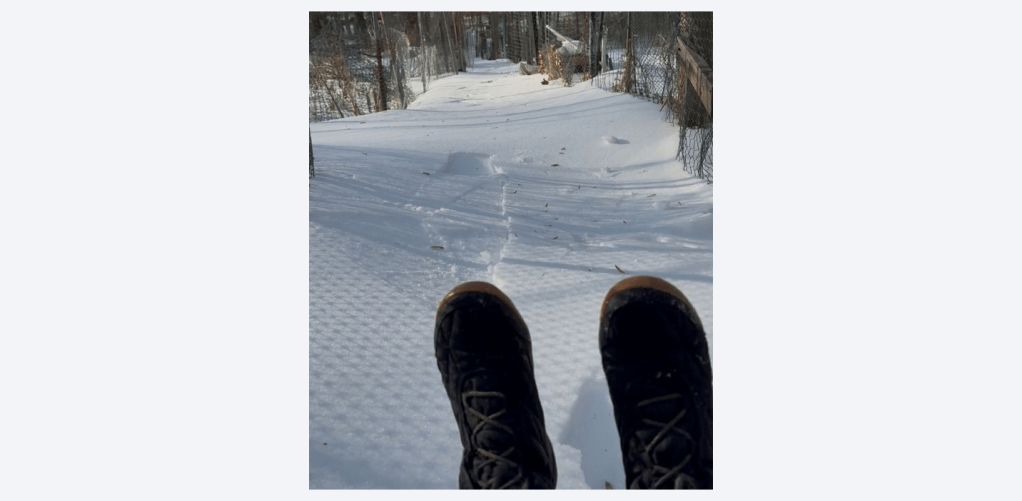
    I was reminded of this not by a memory from my own childhood, but by something my daughter did just recently. She has a small plot in a community garden near her home. The garden is gated, and within it, the individual plots are marked off with sturdy posts and chicken-wire fencing. A narrow path runs down the middle, allowing gardeners to access their garden beds.

    After a heavy snowstorm had passed, she walked over to her plot to get her shovel. The heavy snow had packed down into what people here were jokingly calling “snowcrete”—solid, slick, and surprisingly fast.

    She stood at the head of the path, bundled up in her parka, gloves, and knee-high boots. Enjoying the wintery scene and solitude, she suddenly had an idea.

    Grabbing a large piece of cardboard from a stack the gardeners use, she sat down on it, lifted the front edge with her hands, and launched herself downhill. The narrow path had turned into a perfect little luge run.

    Down she flew, laughing and yelping the whole way.

    At the bottom, she climbed back up the hill and did it again. And again. Five times, at least.

    Later, she sent me a short video she had filmed while racing down the path. Watching it, I assumed she must be somewhere high in the woods on a steep hill. But no—it was simply the quiet little garden path that leads to her vegetable plot, and my daughter, at fifty-five years old, was having the time of her life—utterly free, for a moment, from responsibility, productivity, and even good sense.

    Moments like this remind me that the child within us never fully disappears, if we’re lucky. And perhaps that gift begins with remembering how to protect it in ourselves.

  • Protect the Child’s Right to Play

    Protect the Child’s Right to Play

    As the world feels heavy this week, I’m holding children everywhere in my heart. Today’s reflection is offered in that spirit.

    Seems Like Yesterday

    “Hand me some more nails!” I called down to my sister from my perch high in our favorite pine tree.

    Long ago, someone had planted about a dozen pines in a wide circle above our house. Inside that ring of trees lay what Peggy and I named the secret meadow. The air smelled like Christmas all year long — thick with sap and sun-warmed needles. Purple lupine and bright yellow buttercups pushed up through the grass. Low brush formed perfect hiding places for imaginary enemies and invisible kingdoms.

    This was where we ruled the world.

    Our tree had massive limbs and sticky green needles that clung to our jeans. Five pieces of scrap wood from Dad’s woodpile had been hammered into the trunk — our “magic ladder to the sky.” At the time, I was certain I was at least twenty feet in the air. Looking back, it was probably closer to five. But in childhood, five feet can feel like Everest.

    “I can’t reach!” Peggy yelled, one foot testing the first board, the other still firmly planted on the pine-needle floor below.

    I climbed down a rung, gripping the bark, sap sticking to my palms. She dug into the paper bag Dad had given us and pulled out a fistful of long, heavy nails.

    “What if the board breaks?” Her eyes were wide.

    We had used at least five nails per rung — mostly because hammering them in was the best part of the whole operation.

    “Your other foot’s still on the ground,” I said confidently. “You won’t fall far.”

    That was childhood logic.

    We planned to build a fort at the very top. We would bring our lunch up there and survey the kingdom below — our house, the driveway, the world.

    Five rungs later, sweaty and triumphant, the plan changed.

    “This branch is perfect,” I declared, straddling a thick limb like I was riding a horse. “Hand me the lunch bag first!”

    Mom had packed peanut butter and jelly sandwiches, fully aware she wouldn’t see us for hours.

    Peggy climbed carefully, testing each rung with a bounce before trusting it. Finally, we sat facing each other, legs wrapped around the branch, giggling at our own daring. A Blue Jay landed above us and called out, as if announcing our accomplishment to the forest.

    We were explorers. Builders. Brave.

    The sun lowered. A breeze moved through the pine needles.

    “Peggy! Susan!”

    Then the cowbell.

    Mom stood somewhere below, clanging it in wide circles to make sure we heard.

    “Race you!” I yelled, already halfway down.

    Peggy jumped from the final rung into the soft bed of pine needles. We tore across the meadow, victorious.

    Another great adventure under our belts.


    Times Have Changed

    Some children today cannot step outside to play.

    Some can’t because of violence in their neighborhoods.
    Some because every hour of their day is scheduled.
    Some because screens have quietly replaced dirt, trees, and sky.

    And some because safety itself is uncertain.

    The body needs movement — and safety — to metabolize stress.
    Many children today, across all socioeconomic levels, are not getting either.


    The ACE Study

    The original ACE Study (Adverse Childhood Experiences), conducted between 1995 and 1997, surveyed more than 17,000 adults about their childhoods and their current health.

    Researchers discovered something sobering: as the number of adverse childhood experiences increased, so did the risk for long-term physical and mental health problems.

    ACEs include emotional, physical, and sexual abuse; neglect; and household challenges such as substance abuse, mental illness, parental separation, or incarceration.

    The study revealed something profound:

    Early adversity does not just shape memory.
    It shapes biology.


    Toxic Stress

    Stress, in small doses, helps us grow.

    But when a child lives in ongoing fear or unpredictability — and no steady adult helps regulate that fear — the body never fully relaxes.

    The heart beats faster.
    Muscles stay tight.
    Stress hormones keep flowing.

    Day after day.

    That unrelieved activation is what researchers call toxic stress.
    And it leaves its imprint not just on the mind, but on the body itself.


    The Protective Power of Movement and Play

    In The Deepest Well, Dr. Nadine Burke Harris identifies key strategies for healing a dysregulated stress response: sleep, mental health support, healthy relationships, exercise, and nutrition.

    When I first began studying ACEs, I assumed children naturally get one of those protective factors — exercise. I assumed play was automatic.

    I was wrong.

    Safe play is not guaranteed.

    Children in homes of every color and income level deserve safe spaces to move, explore, and let their bodies discharge stress.

    When children can’t climb, run, swing, dig, or build imaginary kingdoms, their stress physiology has nowhere to go.


    The Power of Safe Movement

    I grew up in an era of open meadows and unlocked doors. My parents did not live with the same fear many parents carry today.

    Now, volunteering at the Boys & Girls Club of America in Washington, D.C., I serve children whose nervous systems carry far more than mine ever did.

    Movement is not a luxury for children.

    It is biology.

    Running.
    Climbing.
    Swinging.
    Digging in dirt.

    These are not trivial games.

    They are how the body releases stress.
    They are how resilience is built from the inside out.

    When children lose safe spaces to move, they lose one of the simplest and most powerful buffers against toxic stress.

    Protecting children includes protecting their right to play.

    And sometimes, when I hear a distant clang of metal, I remember that cowbell — a reminder that freedom and safety can exist together.

    Every child deserves both.

  • The Grief of the Witness

    The Grief of the Witness

    I stood at the window this morning, wrapped in my bathrobe, a cup of steaming coffee in one hand. Heavy rain obscured the street below. Raindrops slid down the glass, one after another.

    God is crying for our crazy world,” I thought.

    “I wonder how they are doing now. Some of them have got to be in their twenties by now.”

    My eyes filled with tears of my own.

    The subject of trafficking and abuse is once again filling the headlines. People are debating. Arguing. Accusing.

    But this morning, I’m not thinking about the headlines.

    I’m grieving for the young survivors I met so long ago. I loved them then. I love them still. And I’m grieving for survivors everywhere who are quietly fighting to heal.


    What the Public Sees vs. What Survivors Live

    The public sees investigations, scandals, and courtroom scenes.

    Survivors live with memory, triggers, and nervous system responses.

    The news cycle will move on soon. Trauma does not.

    Grief often surfaces years after rescue. When survival mode finally quiets, grief rises.

    In survival mode, the body protects. Later, when safety comes, loss begins to be felt — lost childhood, lost trust, lost innocence, lost years.


    The Grief of the Witness

    My grief comes from knowing what should never have happened.

    It comes from understanding that healing can take a lifetime. From knowing that even when someone is safe, the story does not end there.

    There is a kind of grief that belongs to those who stand beside survivors. Not because they are broken — but because we know what was taken.

    And yet, I have witnessed healing.

    I have seen the power of love and play. I have stood in rooms alive with laughter — children reclaiming joy, even if only for an hour.

    That tells me healing is possible.

    And that strengthens my resolve.


    Why Language and Warnings Matter

    Part of that resolve is my writing.

    Stories of abuse can re-traumatize. Headlines alone can awaken buried pain. So I remind myself to speak carefully. Thoughtfully. With restraint.

    There are moments when outrage rises in me — when I want to shout what I know to be true.

    But love speaks differently than outrage.


    Grief and Hope Must Coexist

    Healing unfolds in its own time. There are breakthroughs and setbacks in no particular order. Healing often requires returning to what once overwhelmed us — this time with support.

    If you have ever loved someone who is healing — as a parent, therapist, teacher, advocate, volunteer, or friend — you may recognize this grief.

    It is the grief of the witness.

    Today’s headlines will fade.

    Healing will continue.

    And so will the love.

    And yes, the grief — not in despair, but in devotion.

    With love and hope,
    Susan